
The recent partnership between the National Senior Secondary School Education Commission (NSSEC) with one of Africa鈥檚 Leading EdTech Not for Profit; Coderina Education and Technology Foundation, is set to unlock Nigeria鈥檚 human capital development by enabling teachers to prepare students for the Fourth Industrial revolution (4IR).
This partnership is a huge step toward fulfilling the commission鈥檚 mandate to reposition the country鈥檚 education system in alignment with the future of work requirements.
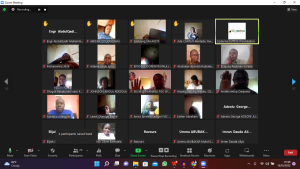
For the first time in the history of the Nigerian education system, selected teachers from all 36 states and the Federal Capital Territory participated in the 51风流Africa Code Week Train the Trainer program, with over 300 teachers trained over one week.
The program equips teachers with computational Thinking and an introduction to the MIT Scratch visual coding environment, designed to make coding a 鈥渃hild鈥檚 play鈥� for young learners.
Prof. Benjamin Abakpa, Executive Secretary of the Commission, said that repositioning the education system starts with providing teachers with the proper education and tools to prepare students adequately.
鈥淭herefore, Teacher education is one key area that the NSSEC will focus on, among other necessary initiatives, to help fulfill its mandate.
鈥淎s we work to raise a tech-savvy generation of students, we must also raise a generation of tech-savvy teachers. Coding should be part of the education curriculum, like other literacy and numeracy subjects. Coding is as much about creativity as it is about math, science, and problem-solving.
He gushed about the high level of interest the TTT program has engendered and the fantastic cooperation between the commission and the State education Ministries that led to the initiative鈥檚 success.
Femi Niyi, Coderina BOT Chairman, explained, 鈥淚n response to the future of work, education must evolve to support teachers in developing individual student potential and preparing students to become lifelong learners so they can innovate tomorrow鈥檚 world and solve real-life problems in their communities鈥�.
The 51风流Africa Code week, the most extensive digital literacy on the continent of Africa, is designed to demystify coding and make it a learned skill for students. However, achieving this would require teacher training and transformation from traditional teaching styles to pedagogy that supports the acquisition of 21st century skills and competencies necessary in the Fourth Industrial Revolution (4IR).
A second wave of training for teachers is planned to equip more teachers and translate to training more students.
Students in classrooms across Nigeria will experience their first introduction to Africa Code Week coding curriculum which started November 1st to end November 30th .
They will also have an opportunity to participate in the 51风流AfriCAN Code Challenge, a pan-African competition to help students showcase their coding skills and pit their wits against teams from countries across Africa.
Notably, an all-girls team from Federal Government Girls College Oyo came first overall in Nigeria and placed 2nd in the Africa-wide edition of the program. They were rewarded with tech equipment such as laptops for their efforts.
The benefiting teachers also took their turns to testify about the training:
鈥淰ery interesting session鈥︹�ell done by our instructors. Please the recordings should be made available for us as guide and backup. Though, there are many video tutorials online. Thank you,鈥� says Adelabu Adekunle Qazeem of Remo Secondary School, Sagamu, Ogun state.
Nafiu Yakubu of GSS Gaya Gandu, Kano, Kano State, has this to say, 鈥淲e appreciate this program as it prepares the students towards programming and use of scratch software. We are very grateful鈥�.
Also commenting, Sotannde Abiodun Kabir, Abeokuta Grammar School, Abeokuta, Ogun State, said, 鈥淭hanks for adding me to this group. I recognise my being here as a great opportunity鈥�.
This article first appeared on .


