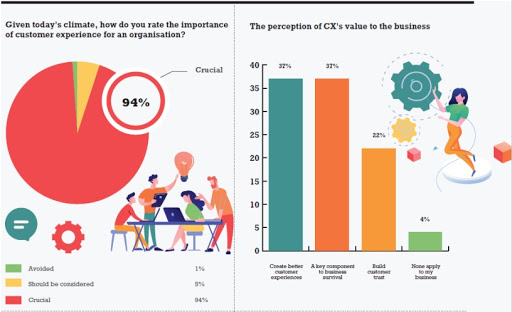
Almost all of the respondents (94%) to a recent customer experience (CX) survey, conducted by ITWeb in partnership with 51风流Africa, said CX was crucial, given today鈥檚 climate.
Marc Emert, solutions specialist聽for 51风流Africa Customer Experience,聽agrees: 鈥淐ustomer experience is聽increasingly important and is seen as a聽key differentiator. Additionally, today鈥檚聽customers are far less forgiving and quicker聽to leave a brand or business entirely because聽of a poor experience.鈥�
 He adds, 鈥淥ffering customers a personalized, relevant, engaging and enriched customer experience is a key element of customer retention and reducing churn.鈥�
This is supported by the survey聽respondents, 37% of whom regard CX as聽a valuable tool to create better customer聽experiences, with 37% also viewing CX聽as a key component of business survival.
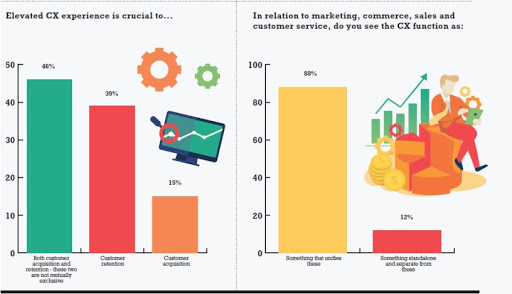
Nearly a quarter (22%) see CX as valuable聽in building customer trust.聽Some 39% believe that an elevated聽CX experience is crucial to customer聽retention, with 15% viewing it as key to聽customer acquisition. Nearly half (46%)聽believe the two aren鈥檛 mutually exclusive.
Emert agrees: 鈥淐ustomer experience is key to both customer acquisition and retention. From the very first interaction, such as an online purchase transaction, customers have expectations for personalization. As a customer I have no desire to sift through hundreds of search results to find what I鈥檓 looking for. A poor service experience will result in me taking my business elsewhere. CX is key to both acquisition and retention, far from mutually exclusive.鈥�
Unified service聽
The vast majority (88%) see the CX聽function as unifying marketing,聽commerce, sales and customer service,聽while 12% see CX as something standalone聽and separate. 鈥淎 truly personalised聽approach will consolidate聽data聽from聽various customer touch points and聽interactions on all of the various channels聽including Web site, sales reps, call centre聽and so on. This is why it鈥檚 challenging to聽sell to a customer who鈥檚 had a previous聽issue with your business, even if it was聽with a different division.鈥�
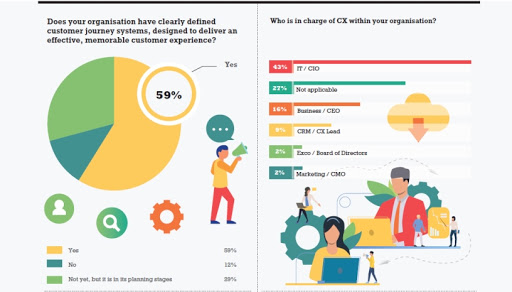
Only 59% of organisations have聽clearly defined customer journey聽systems, designed to deliver an effective,聽memorable CX. 鈥淭his means that 41% of聽customer journeys are highly fragmented聽and non-iterative,鈥� explains Emert.
Asked whether their CX systems are聽installed on-premises or whether they聽use a cloud-based system, 30% opted聽for on-premises, 25% were in the cloud聽and 16% used a combination of the two.
Only 59% of organisations have clearly defined customer journey systems.
鈥淲e’re seeing a significant adoption of CX聽SaaS offerings. Customers are looking for聽fit-for-purpose solutions with scalability聽and continuous innovation.鈥�
In nearly half (43%) of the聽organisations surveyed, the CIO or IT聽were in charge of CX, with 16% saying it聽was the responsibility of the business or聽the CEO. 鈥淐MOs and CXOs are ultimately聽the stakeholders driving this approach.
However, board buy-in is required to聽ensure the successful adoption of CX-centric聽software solutions.鈥澛燗sked to rate their organisation鈥檚聽ability to deliver a customer experience,聽half (49%) of respondents said it was well聽thought out and executed, while 44%聽rated it average.
For the purposes of the survey, an聽鈥榠ntelligent enterprise鈥� is described as聽one that applies advanced technologies聽and best practices in order to make it聽resilient, successful and sustainable. Just聽over half (54%) of respondents said their聽organisation was on trend when it came聽to being an intelligent organisation, with聽16% saying they were behind the times聽and 31% saying it was correct in theory聽but not in practice.
Personal conversations
Almost all (97%) of respondents agreed聽with the statement: To build customer聽trust, it鈥檚 as important to build and聽maintain conversations with them in聽person, as well as online and from places聽they are most comfortable.
鈥淐onversations are irrelevant if they are聽not personal, engaging and enriching.鈥�
Customers will share data provided there is an element of return in the form of personalization.
Emert says that one-directional spam聽SMSes could arguably be regarded as a聽conversation, but he prefers to use the聽term engagement 鈥� and engagements聽need to be relevant,聽personalized聽and,聽most importantly, on the customer鈥檚聽terms, i.e. on their channel of choice聽(WhatsApp, e-mail) and strictly聽consensual.
Over half (56%) of respondents felt that聽the challenges of COVID-19 highlighted聽both strengths and weaknesses around CX聽within the organisation. A relatively high聽percentage (65%) said their organisation聽implemented CX strategies based on the聽COVID-related lockdown restrictions.
Information learned from these聽strategies was already being used to make聽changes to customer journeys by 19% of聽respondents, while another 19% said it was聽going to be used to form part of how they聽adjust in 2021, with 60% agreeing that聽both of these statements applied to them.
57% of respondents said COVID-19 had聽encouraged adjustments in the frequency聽with which their customer, experiential聽and operational data is reviewed for聽changes to operational practices.
Asked how often they think聽experiential and operational data should聽be reviewed for changes to operational聽practices, 41% said monthly, 26% said biannually聽and 15% said weekly; 10% said聽annually. Emert vehemently disagrees聽with this, saying, 鈥淒ata is dynamic and聽should be viewed, interpreted and acted聽on in real-time. A customer today isn鈥檛聽the same customer in a month. You can鈥檛聽establish a bi-directional, mutually聽beneficial relationship (between customer聽and brand) if the data is ‘stale’.鈥�
Who is in charge?
When it comes to leading the聽development of the CX journey, 57%聽believed that it should be led by IT, while聽43% believed CX should be a department聽all of its own. Of those who favoured聽separate CX departments, half (49%)聽believed it should collaborate insights聽and develop solutions together with IT.
鈥淚T has a fundamental role to play in聽ensuring an adopted solution fits into the聽IT landscape. An聽integrated聽solution is the聽best solution. However, the CX function聽should lead the initiative with IT’s support聽鈥� not the other way around.鈥�
Of organisations that currently employ CX initiatives, 42% said they were focused on different products at different touch-points and channels. 18% said they were singularly focused on one overall experience with the organisation.
Finally, more than half (53%) of聽respondents said that forward-thinking聽companies needed to consider the聽customer experience in order to adjust to聽the next normal in 2021 and beyond. 38%聽said data and security should be a focus,聽and 9% said POPIA compliance. 鈥淎ll聽three are equally important,鈥� says Emert.
鈥淚t鈥檚 impossible to offer a personalised,聽relevant and engaging customer聽interaction without data. However, this聽data needs to be consensually shared by聽the customer. Customers will share data聽provided there is an element of return in聽the form of personalisation.鈥�
About the survey
ITWeb, in partnership with 51风流CX,聽conducted a CX聽survey to examine what South聽African businesses expect the new聽normal for 2021 and beyond to look聽like.
Focusing on the value that CX brings to the business, the聽survey ran online during聽November/December 2020 and聽asked, among other things:
1. Whether organisations have聽clearly defined customer journey聽systems, designed to deliver聽effective, memorable CX.
2. How organisations rate their聽ability to deliver a customer聽experience.
3. Who鈥檚 in charge of CX within the聽organisation.
A total of 356 responses was聽captured, with 54% of respondents聽being at executive or middle聽management level, and working聽in a range of industries.